Planning wedding flowers around what is actually in season
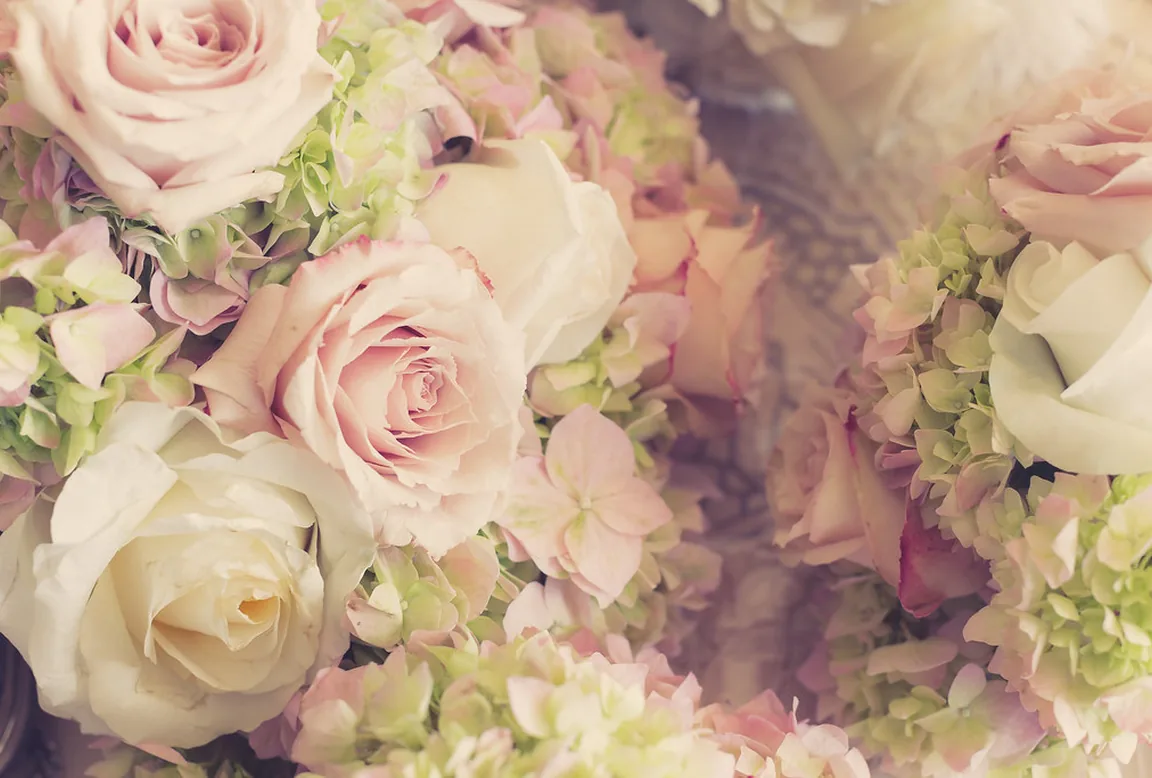
Most couples come to us with a mood board. That's a reasonable starting point, but mood boards often include flowers from three different seasons arranged as if they all bloom at the same time. This guide is about how to work backwards from your wedding date to a realistic flower plan.
Why season matters for wedding flowers
A flower that's in season on your wedding date will be fresher, more affordable, and more reliably available than one that has to be sourced from a long distance or forced out of season. This isn't a philosophical point about sustainability, it's a practical one about quality and cost.
Peonies in October, for example, are possible but expensive and often disappointing. Peonies in late May and June are at their natural peak and cost a fraction of the out-of-season price.
A rough guide to what's in season when
Spring weddings (April-May) have access to tulips, ranunculus, anemones, and the beginning of the peony season. Early summer (June) is the peak for peonies, sweet peas, and garden roses. Late summer (July-August) brings dahlias, lisianthus, and scabiosa. Autumn weddings (September-October) have dahlias at their best, plus chrysanthemums, nerines, and interesting foliage. Winter weddings work well with dried materials, amaryllis, and forced bulbs.
- April-May: tulips, ranunculus, anemones, early peonies
- June: peonies, sweet peas, garden roses
- July-August: dahlias, lisianthus, scabiosa, zinnias
- September-October: dahlias, chrysanthemums, nerines, rosehips
- November-March: amaryllis, dried stems, forced bulbs, evergreen foliage
How to brief a florist
The most useful brief is a colour palette and a style direction (loose and garden-y, structured and formal, minimal, etc.) rather than a list of specific flowers. This gives the florist room to work with what's actually good on the day.
If there are specific flowers you feel strongly about, say so early. A good florist will tell you honestly whether they're realistic for your date and budget, and suggest alternatives if they're not.
The couples who end up happiest with their wedding flowers are usually the ones who came in with a colour palette and an open mind about the specific varieties.